NAVAL INTELLIGENCE DIVISION – GEOGRAPHICAL HANDBOOK SERIES.

£25.00

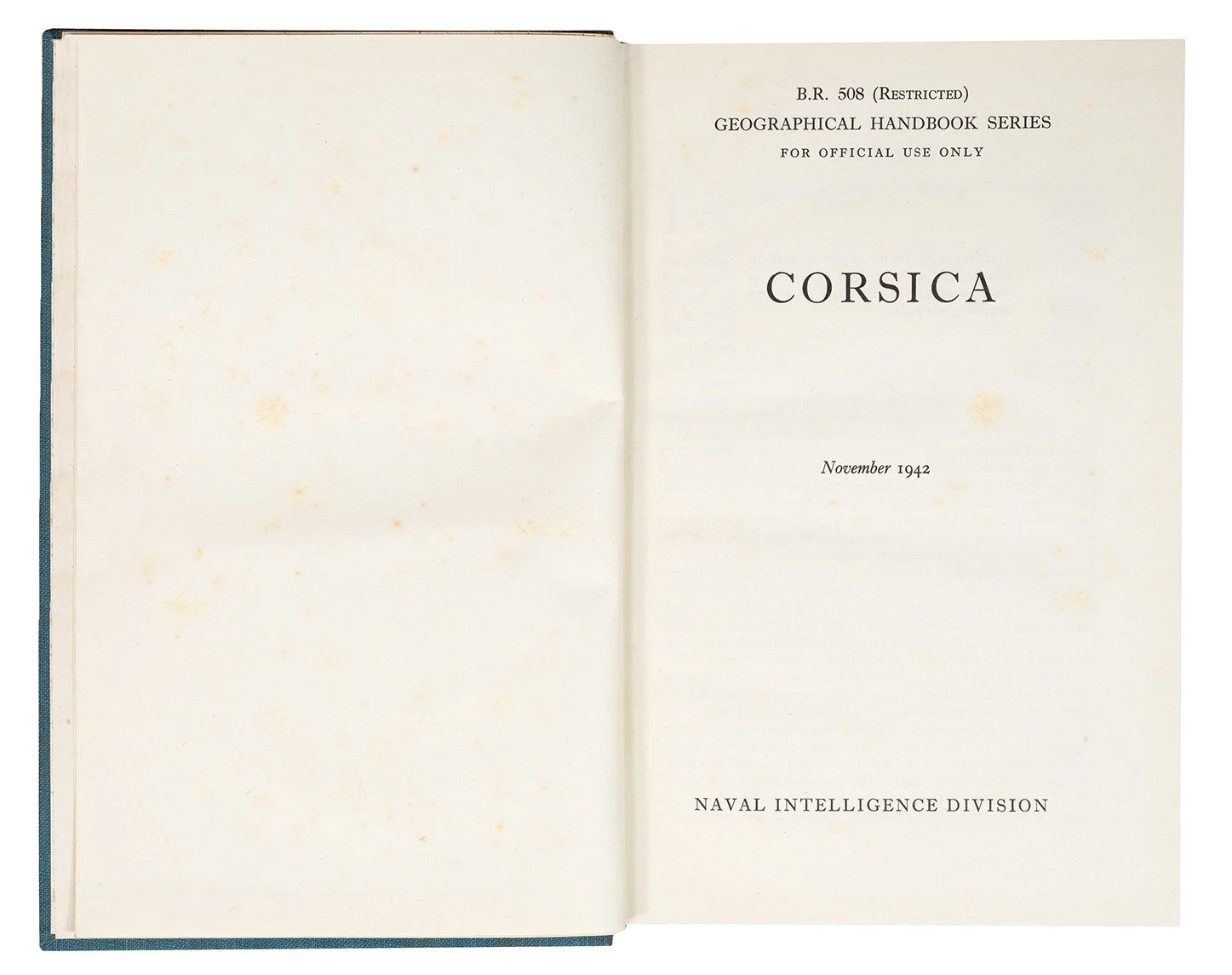
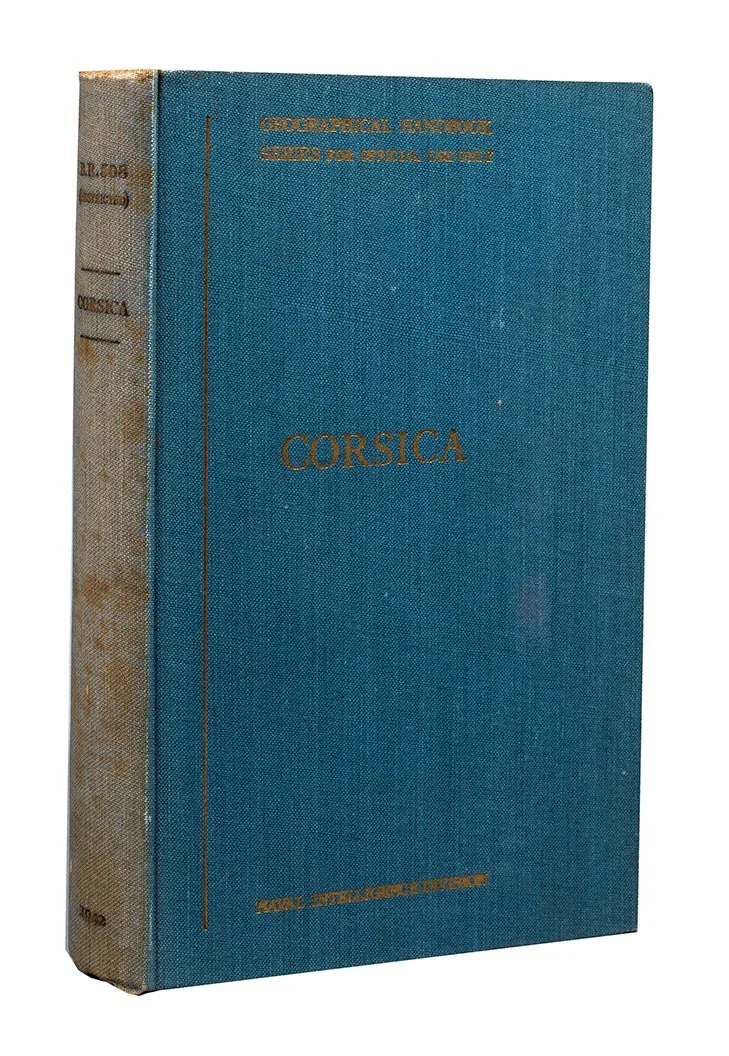
B[ook of] R[eference] 508 … Corsica.

London: Naval Intelligence Division, November 1942..

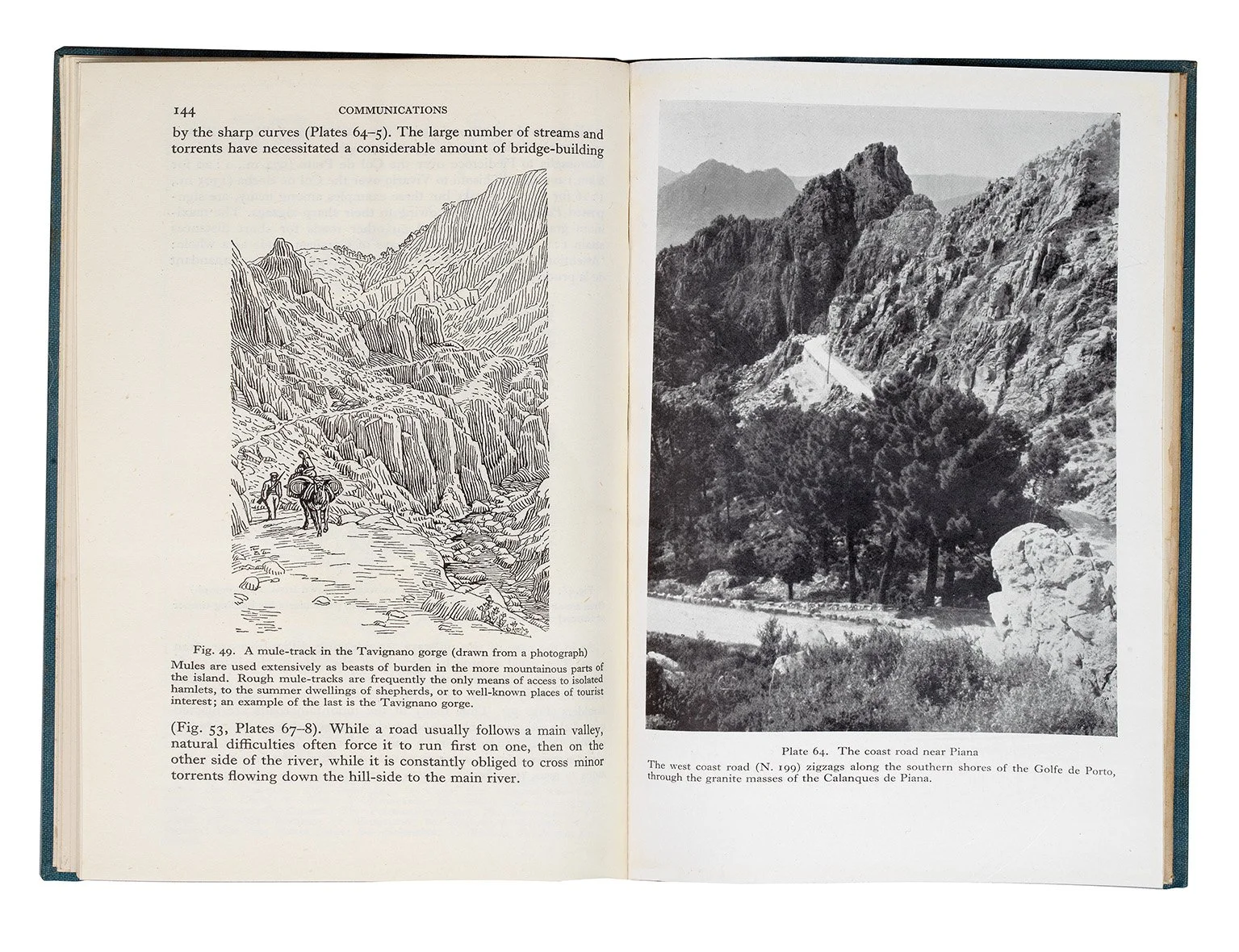
This volume relating to Corsica was but one of a series of comprehensive reports covering physical geography, history, peoples, modern history and administration, economic geography, ports and communications, that originated from a need in the First World War ‘to supply, by scientific research and skilled arrangement, material for the discussion of naval, military and political problems’ (preface). These were continued to be used during the Second World War but were found to be inadequate: ‘The present series of Handbooks … is an entirely new set of books, produced … by trained geographers drawn largely from the Universities, and working at sub-centres established at Oxford and Cambridge’ (preface). This volume was produced at the Cambridge sub-centre, and among the contributors Gwen Raverat (1885-1957), grand-daughter of Charles Darwin and one of England’s greatest wood-engravers, is credited with helping to draw the maps and diagrams.

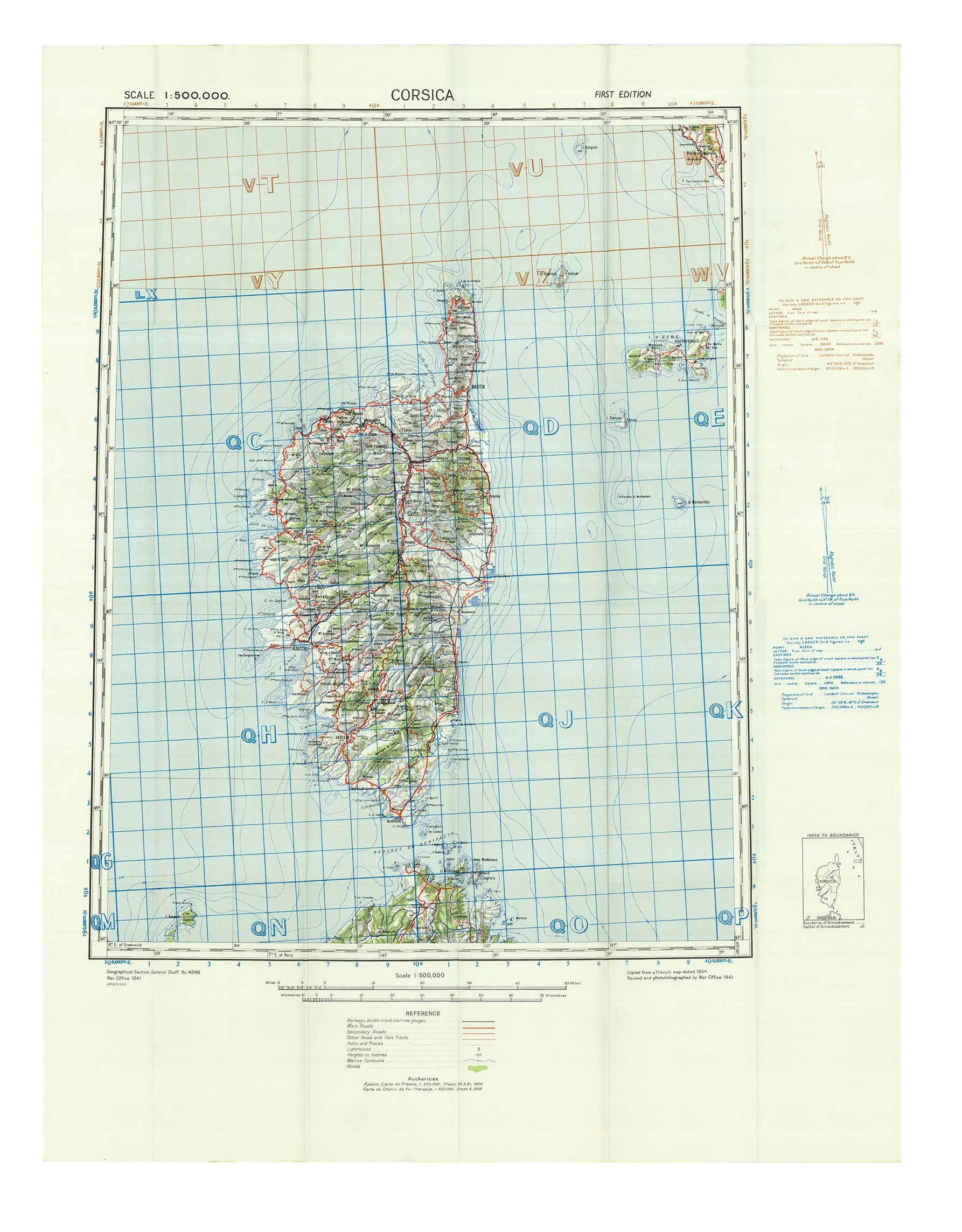
While some of the volumes in this series used civilian-produced maps, the large folding map in the rear pocket is the War Office’s own publication dated 1941. It is stated at the foot that it was ‘Copied from a French map dated 1934’, while ‘first edition’ is printed at head. Its scale is 1:500,000 and shows relief with shades of grey while forested areas are in green. Spot heights are given in metres, roads in red, railways and toponyms in black, rivers and sea in blue with submarine contours appear in dark blue.

B[ook of] R[eference] 508 … Corsica.

London: Naval Intelligence Division, November 1942..

This volume relating to Corsica was but one of a series of comprehensive reports covering physical geography, history, peoples, modern history and administration, economic geography, ports and communications, that originated from a need in the First World War ‘to supply, by scientific research and skilled arrangement, material for the discussion of naval, military and political problems’ (preface). These were continued to be used during the Second World War but were found to be inadequate: ‘The present series of Handbooks … is an entirely new set of books, produced … by trained geographers drawn largely from the Universities, and working at sub-centres established at Oxford and Cambridge’ (preface). This volume was produced at the Cambridge sub-centre, and among the contributors Gwen Raverat (1885-1957), grand-daughter of Charles Darwin and one of England’s greatest wood-engravers, is credited with helping to draw the maps and diagrams.

While some of the volumes in this series used civilian-produced maps, the large folding map in the rear pocket is the War Office’s own publication dated 1941. It is stated at the foot that it was ‘Copied from a French map dated 1934’, while ‘first edition’ is printed at head. Its scale is 1:500,000 and shows relief with shades of grey while forested areas are in green. Spot heights are given in metres, roads in red, railways and toponyms in black, rivers and sea in blue with submarine contours appear in dark blue.

Octavo (215 x 138mm). x, 246 pp., 64 maps and diagrams, 86 plates, large folding map in pocket at end. (Slight cracking of textblock between pp.ii-iii.) Original blue cloth gilt (spine faded, extremities faintly rubbed).

Provenance: Andover Boys’ Secondary School (stamps on front pastedown).