‘Theory of the Earth, or an Investigation of the Laws Observable in the Composition, Dissolution, and Restoration of Land upon the Globe.’ [In:] Transactions of the Royal Society of Edinburgh. Vol. I.
Edinburgh: for J. Dickson, 1788.
One of the most important scientific papers ever published. James Hutton’s ‘Theory of the Earth’ in its original journal appearance.
A true landmark in the history of science: in 1785 Hutton presented this paper to the Royal Society of Edinburgh, arguing for what we would call ‘uniformitarianism’:
The formation of the surface of the earth is one continuous process which can be studied entirely from terrestrial materials without cosmological or supernatural intervention. (PMM 247)
Hutton’s fundamental intervention was to propose a mechanism for the formation, alteration and ultimate destruction of vast geological features. In observable formations we see ‘the ruins of an older world’: mountains that have been built up by igneous forces and worn down by weathering and chemical processes. This cyclical view of creation and destruction is summed up in one of the most elegant phrases in the whole history of science:
The result, therefore, of this physical enquiry is, that we find no vestige of a beginning,—no prospect of an end.
Ultimately Hutton’s work was to be continued by Charles Lyell, and, in its treatment of gradual changes over vast spans of time, forms the philosophical background of Charles Darwin’s theory of evolution.
More proximately, Hutton’s work was continued, discussed and augmented within the pages of the Transactions of the Royal Society of Edinburgh, and here we offer not only the first presentation of Hutton’s paper, but also his and others’ contributions over the subsequent years, including Hutton’s ‘Observations on Granite’, Playfair’s biographical account of Hutton, and a group of papers by Sir James Hall constituting one of the most significant early defences of Hutton’s theory.
James Hutton (1726–1797) was a Scottish geologist, physician, and naturalist often referred to as the ‘father of modern geology.’ Born in Edinburgh, he initially studied medicine but developed a deep interest in agriculture and natural sciences. After inheriting family land, Hutton applied scientific principles to farming, which led to his fascination with soil formation and rock layers. His observations during this period formed the foundation of his later geological theories.
Hutton travelled extensively across Scotland, studying rock formations, soil erosion, and the effects of weathering. He was struck by the evidence of deep time in the Earth’s layers, noting that processes such as sedimentation and erosion must have occurred over vast time spans. These observations led him to reject the prevailing view of a young Earth shaped by catastrophic events, instead proposing that the Earth was continuously and gradually shaped by observable natural processes.
‘The Theory of the Earth’ was revised and published in two volumes in 1795, with a third volume being added much later in 1899, edited by Sir Archibald Geikie.
Ward & Carozzi 1161; cf. PMM 247
‘Theory of the Earth, or an Investigation of the Laws Observable in the Composition, Dissolution, and Restoration of Land upon the Globe.’ [In:] Transactions of the Royal Society of Edinburgh. Vol. I.
Edinburgh: for J. Dickson, 1788.
One of the most important scientific papers ever published. James Hutton’s ‘Theory of the Earth’ in its original journal appearance.
A true landmark in the history of science: in 1785 Hutton presented this paper to the Royal Society of Edinburgh, arguing for what we would call ‘uniformitarianism’:
The formation of the surface of the earth is one continuous process which can be studied entirely from terrestrial materials without cosmological or supernatural intervention. (PMM 247)
Hutton’s fundamental intervention was to propose a mechanism for the formation, alteration and ultimate destruction of vast geological features. In observable formations we see ‘the ruins of an older world’: mountains that have been built up by igneous forces and worn down by weathering and chemical processes. This cyclical view of creation and destruction is summed up in one of the most elegant phrases in the whole history of science:
The result, therefore, of this physical enquiry is, that we find no vestige of a beginning,—no prospect of an end.
Ultimately Hutton’s work was to be continued by Charles Lyell, and, in its treatment of gradual changes over vast spans of time, forms the philosophical background of Charles Darwin’s theory of evolution.
More proximately, Hutton’s work was continued, discussed and augmented within the pages of the Transactions of the Royal Society of Edinburgh, and here we offer not only the first presentation of Hutton’s paper, but also his and others’ contributions over the subsequent years, including Hutton’s ‘Observations on Granite’, Playfair’s biographical account of Hutton, and a group of papers by Sir James Hall constituting one of the most significant early defences of Hutton’s theory.
James Hutton (1726–1797) was a Scottish geologist, physician, and naturalist often referred to as the ‘father of modern geology.’ Born in Edinburgh, he initially studied medicine but developed a deep interest in agriculture and natural sciences. After inheriting family land, Hutton applied scientific principles to farming, which led to his fascination with soil formation and rock layers. His observations during this period formed the foundation of his later geological theories.
Hutton travelled extensively across Scotland, studying rock formations, soil erosion, and the effects of weathering. He was struck by the evidence of deep time in the Earth’s layers, noting that processes such as sedimentation and erosion must have occurred over vast time spans. These observations led him to reject the prevailing view of a young Earth shaped by catastrophic events, instead proposing that the Earth was continuously and gradually shaped by observable natural processes.
‘The Theory of the Earth’ was revised and published in two volumes in 1795, with a third volume being added much later in 1899, edited by Sir Archibald Geikie.
Ward & Carozzi 1161; cf. PMM 247

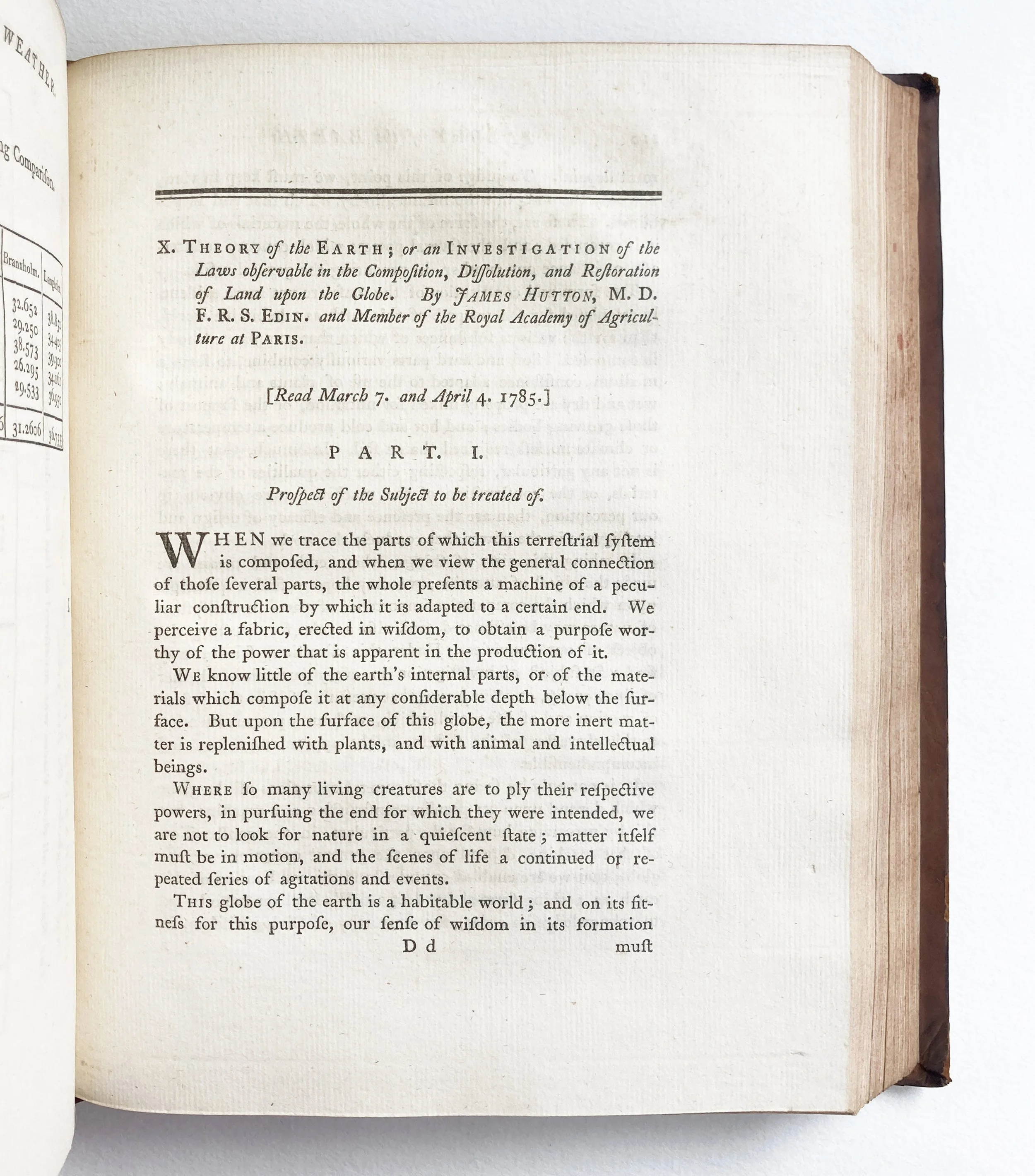 Image 1 of 6
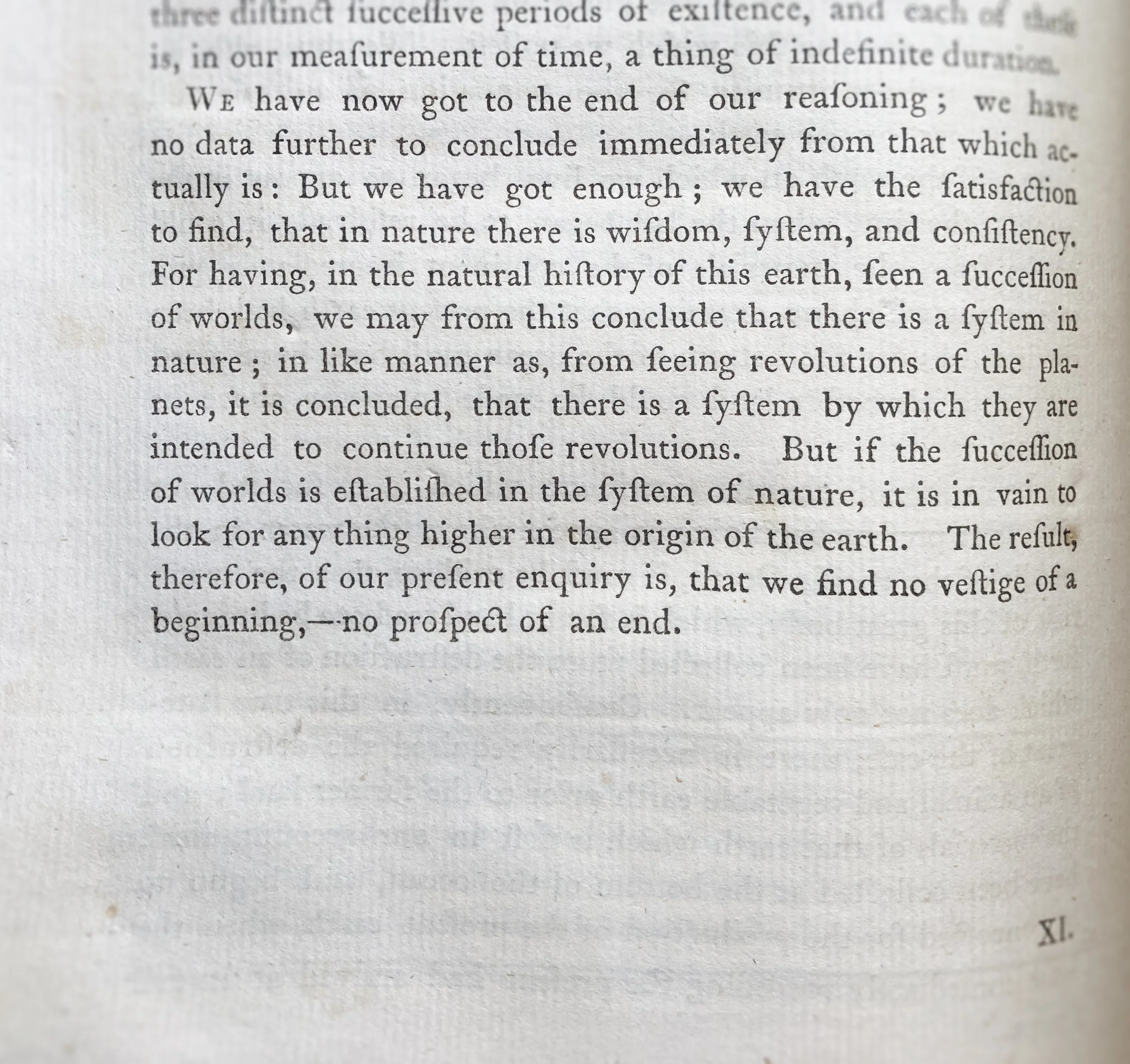 Image 2 of 6
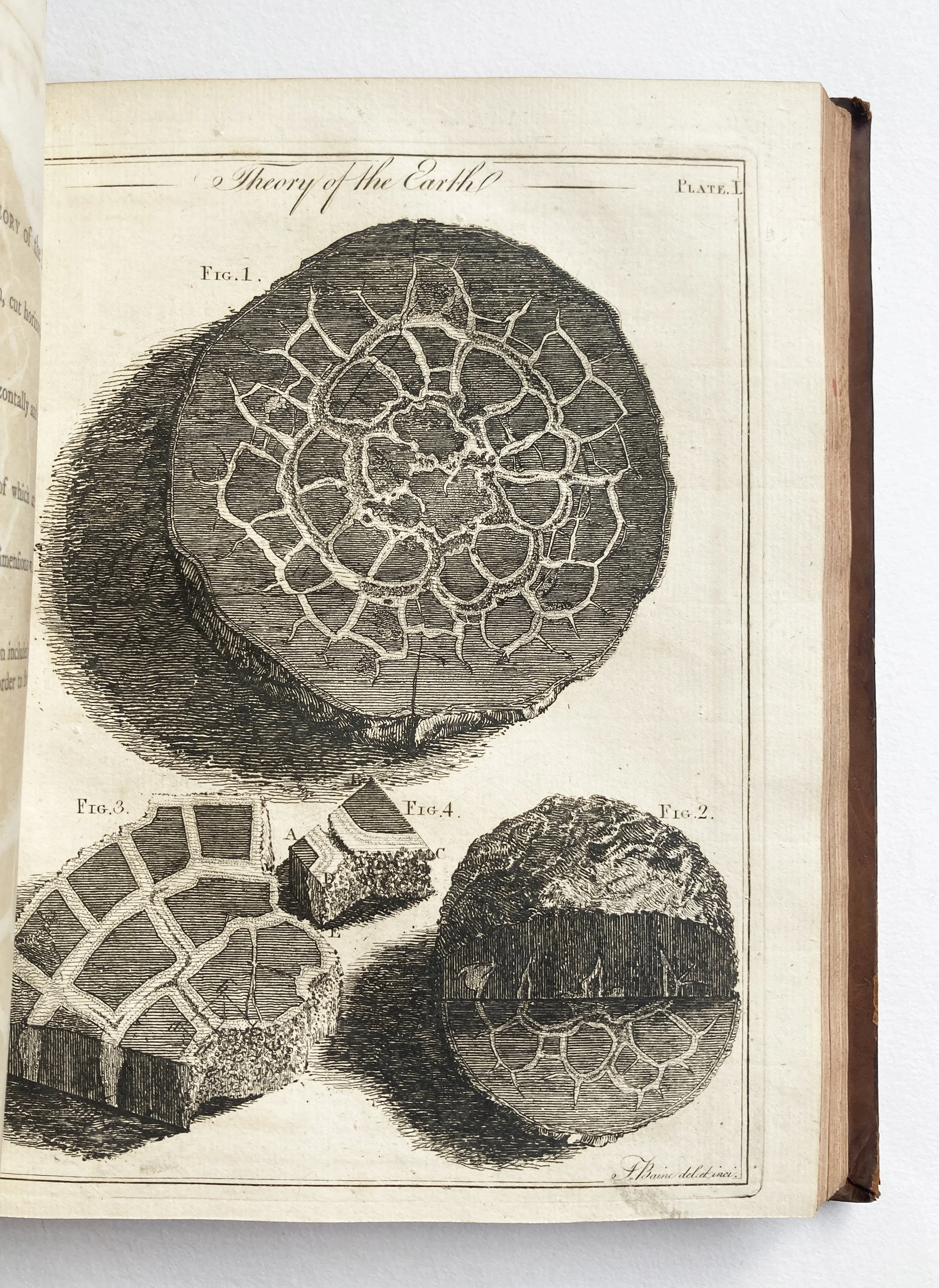 Image 3 of 6
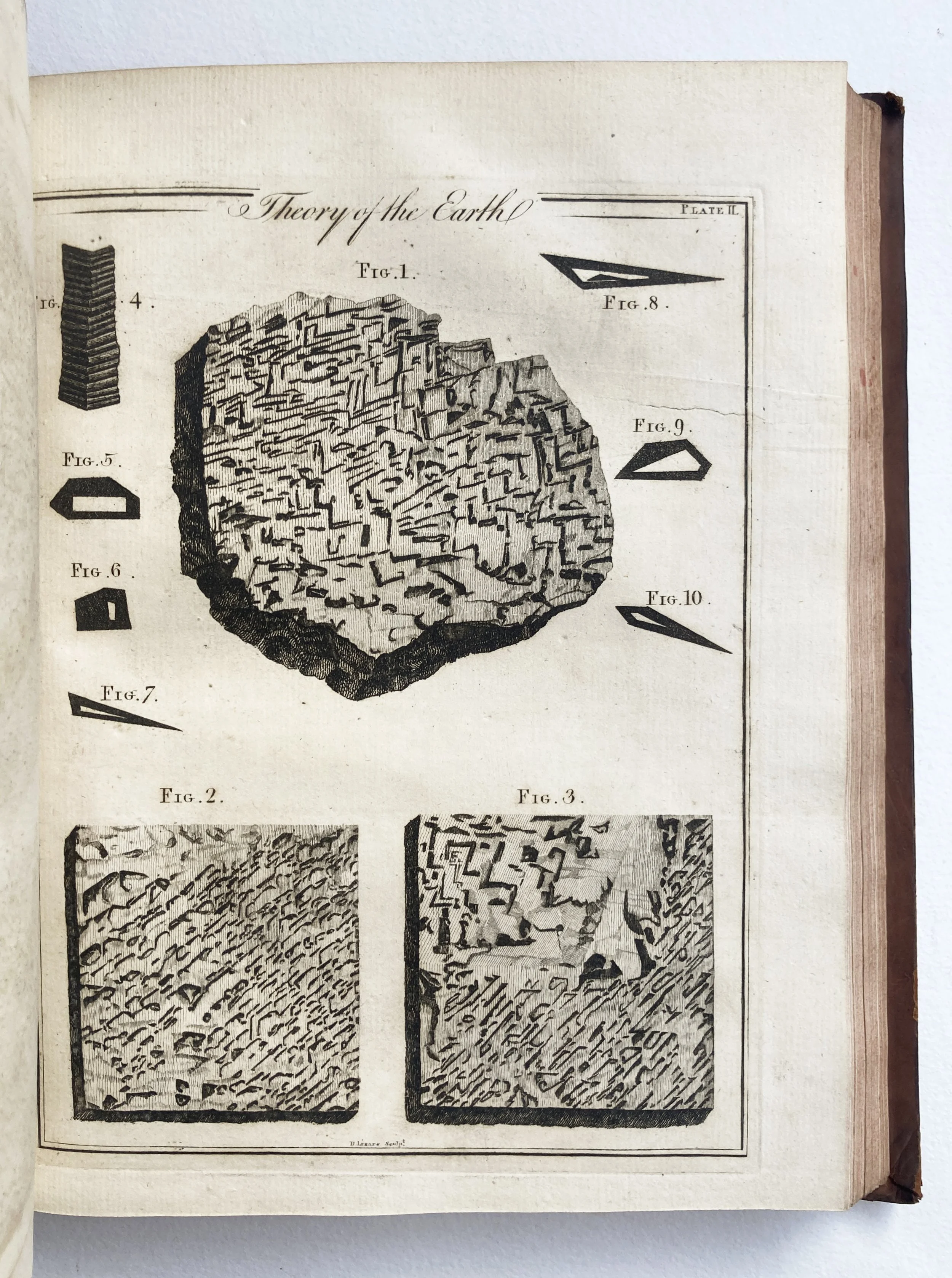 Image 4 of 6
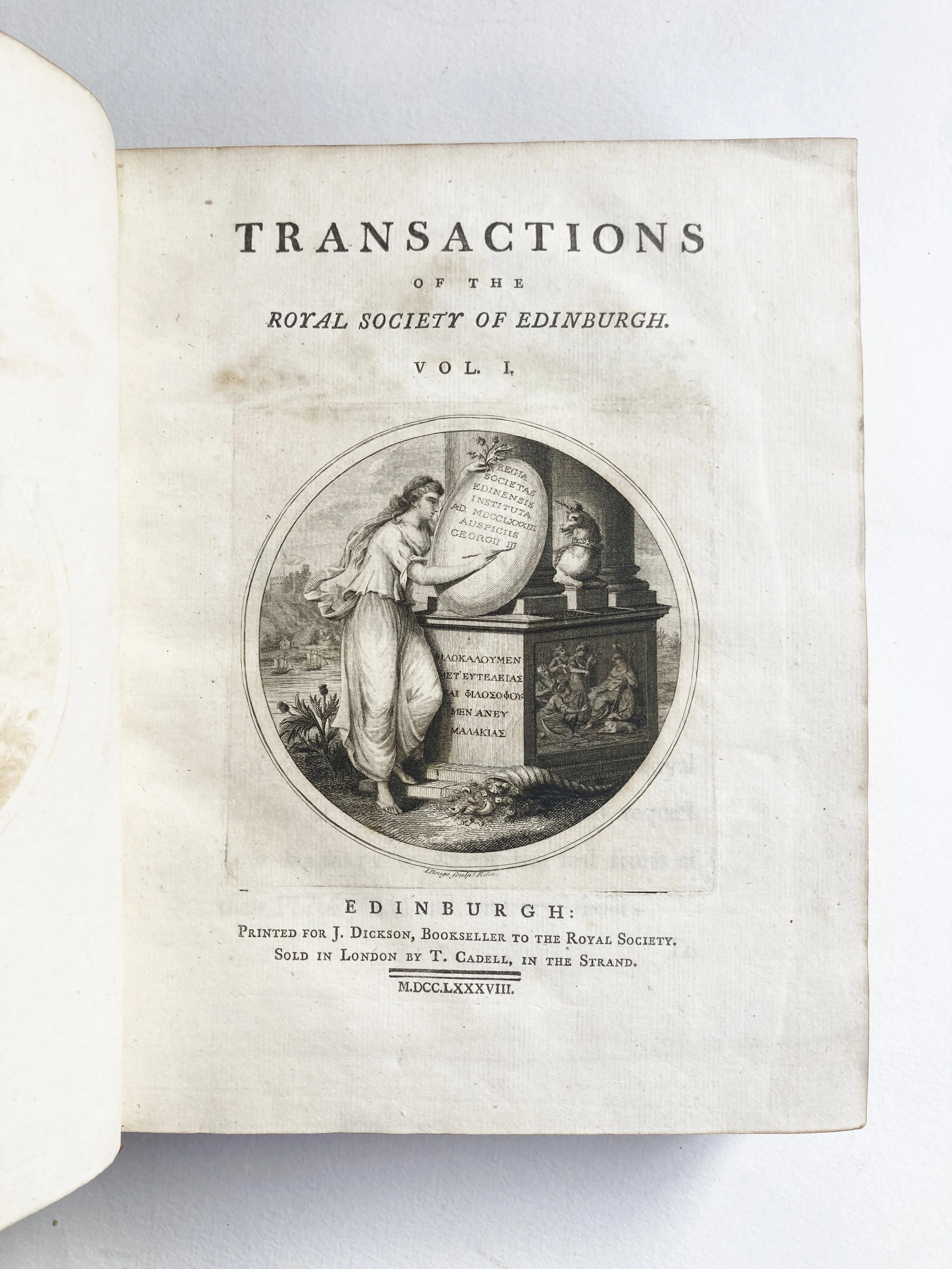 Image 5 of 6
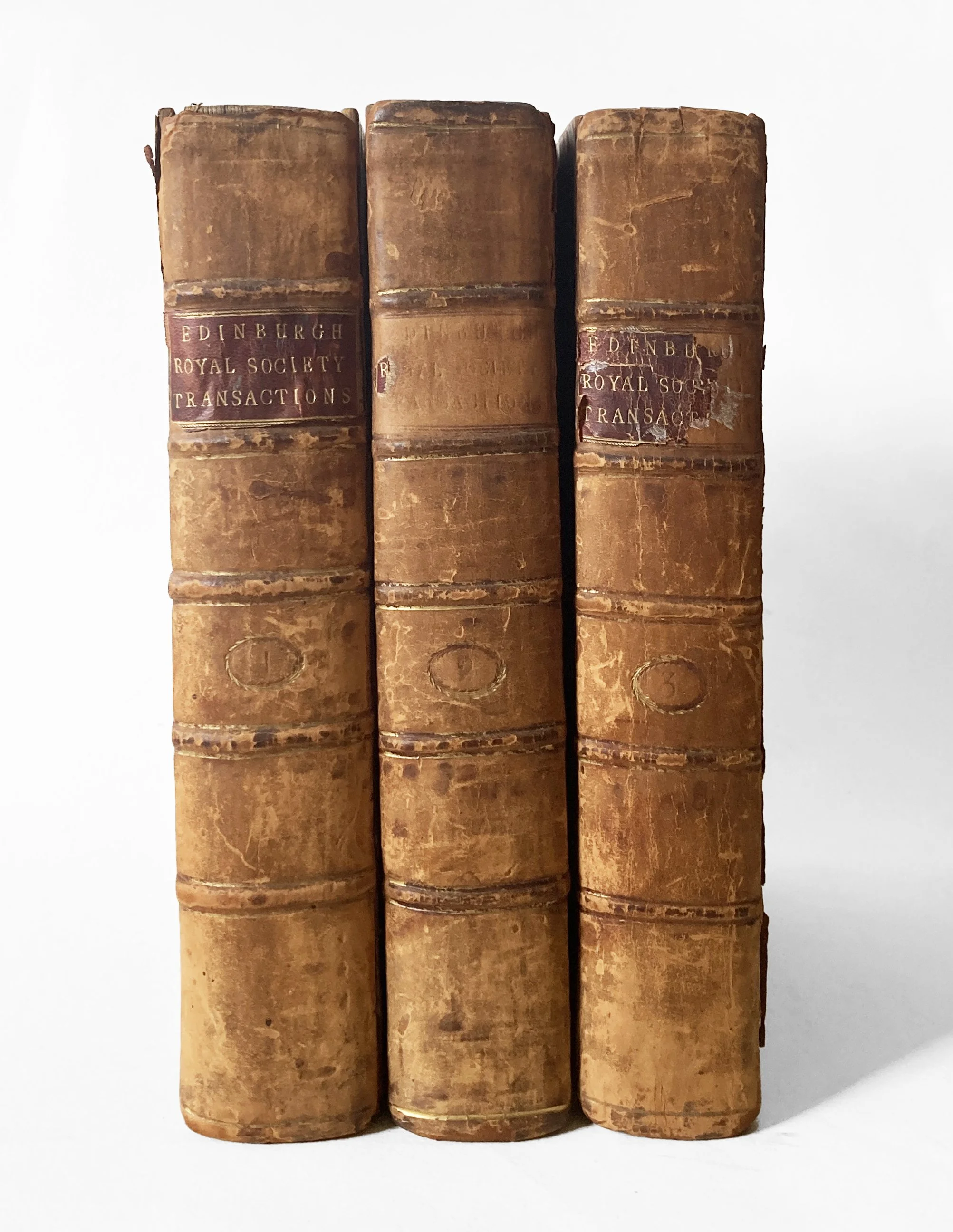 Image 6 of 6