BOOTH, Charles (1840-1916)

£12,000.00

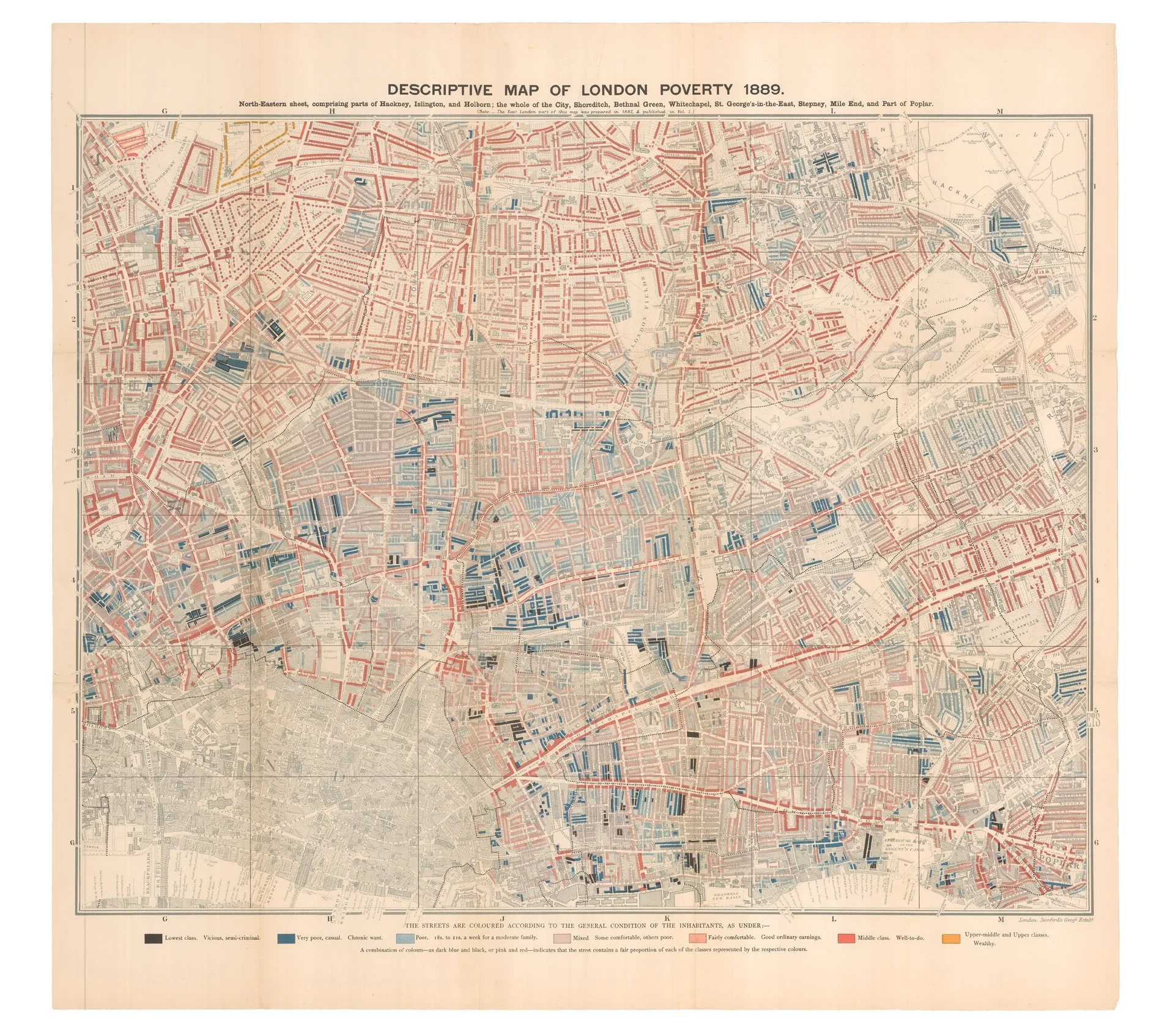
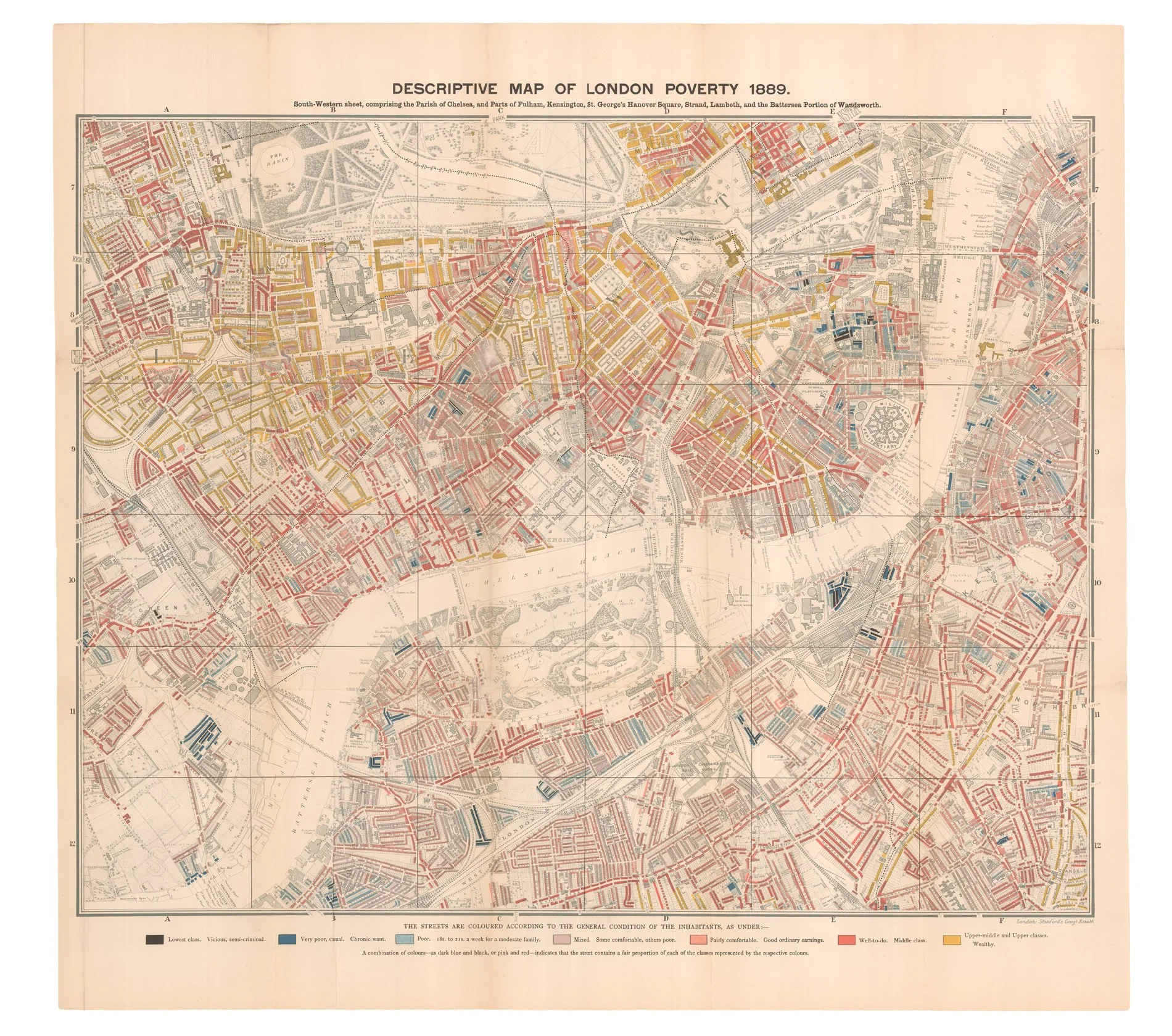
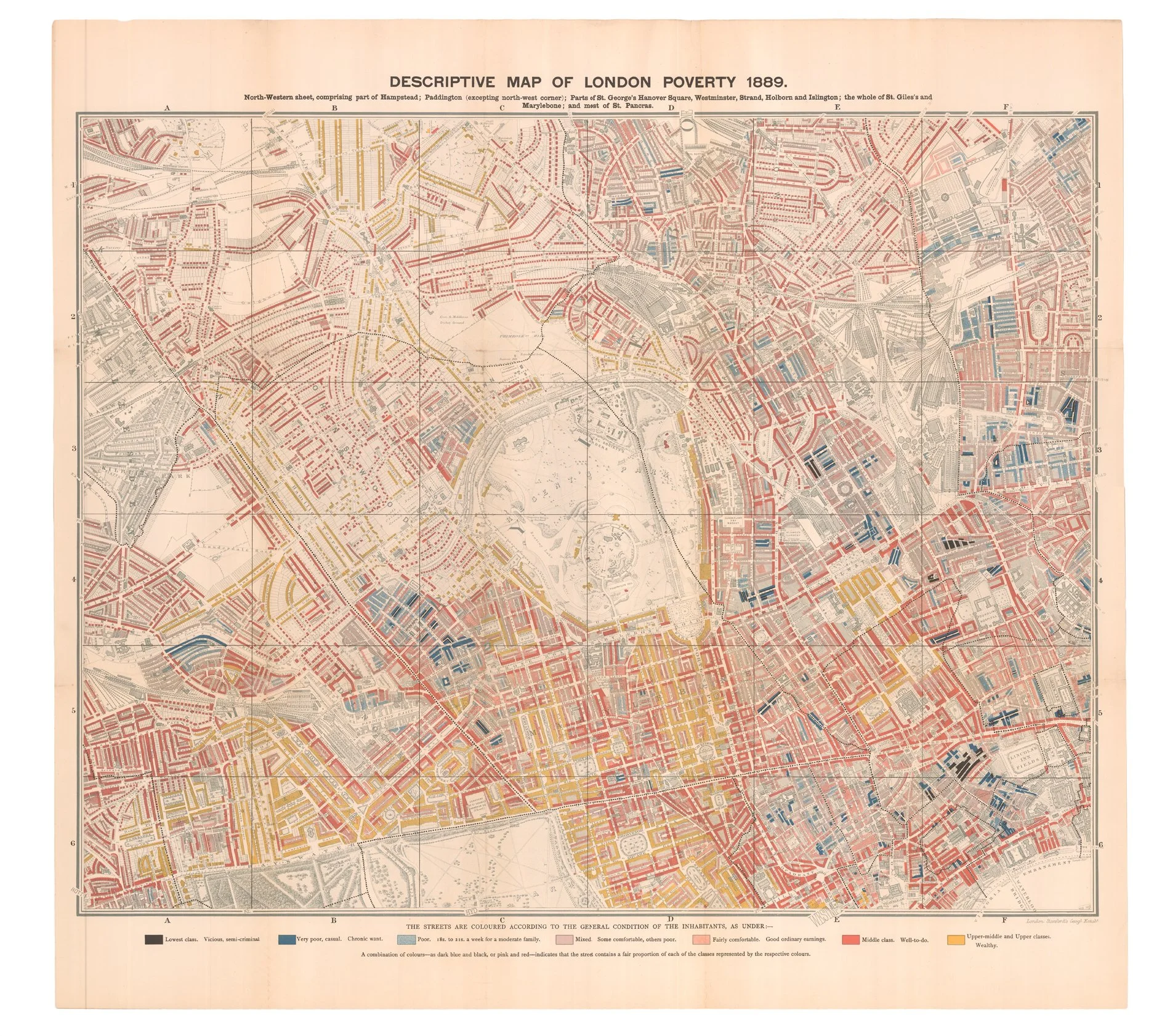
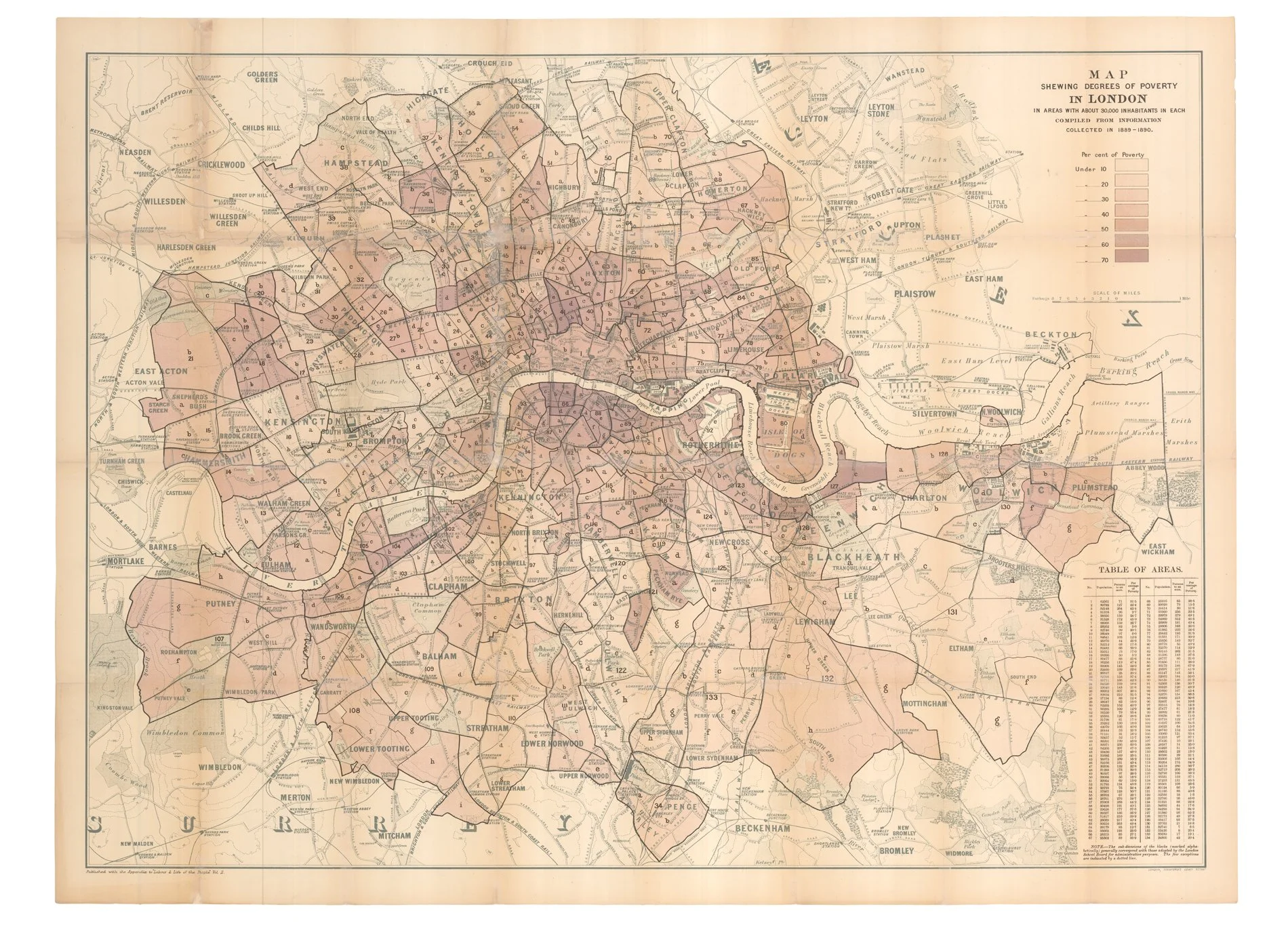
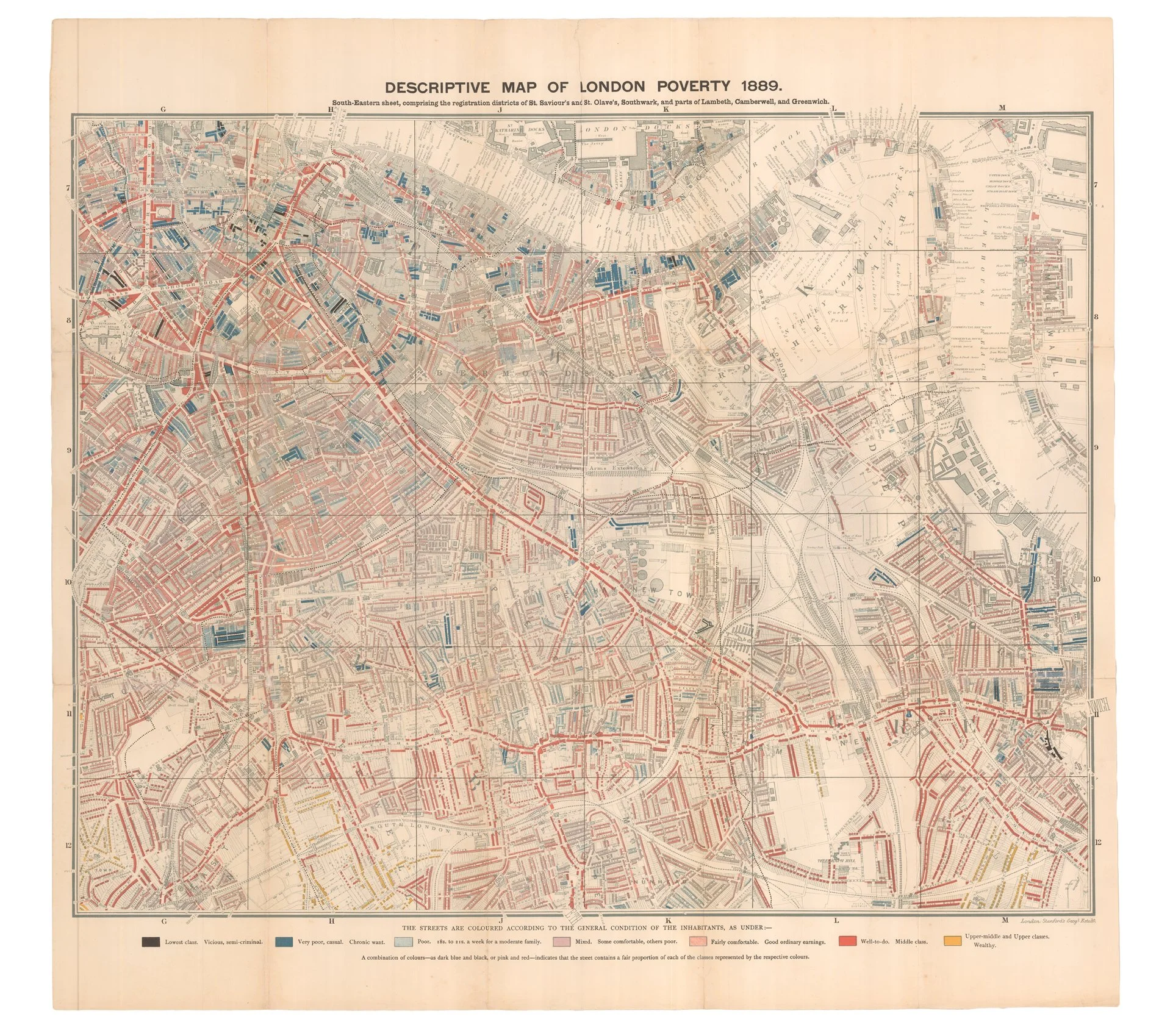
Descriptive Map of London Poverty 1889 [With:] – Map Shewing Degrees of Poverty in London in areas with about 30,000 inhabitants in each […]

London: Stanfords, 1890–1891.

Booth’s famous ‘poverty’ maps, the most comprehensive review of poverty in London.

Here we offer both the detailed map on four sheets, and the large index map, often not included. Booth and his team embarked on a landmark social and economic survey that found that 35% of Londoners lived in poverty. The accompanying maps are lithographed on a scale of 6 inches to one mile, each with a key showing the streets colour-coded according to the wealth of the inhabitants, ranging from black (‘Lowest class’) through shades of blue and purple (‘Very poor’, ‘Moderate Poverty’, ‘Poverty & Comfort [mixed]’), to red (‘Well to-do’); the ‘Wealthy’ are colour-coded in yellow. He began in 1887 with a pilot survey of Tower Hamlets and continued for fifteen years. He and his small army of researchers gathered as much information as they could through a great variety of sources: interviews, questionnaires, reports from London school board visitors, and house-to-house visits.

Descriptive Map of London Poverty 1889 [With:] – Map Shewing Degrees of Poverty in London in areas with about 30,000 inhabitants in each […]

London: Stanfords, 1890–1891.

Booth’s famous ‘poverty’ maps, the most comprehensive review of poverty in London.

Here we offer both the detailed map on four sheets, and the large index map, often not included. Booth and his team embarked on a landmark social and economic survey that found that 35% of Londoners lived in poverty. The accompanying maps are lithographed on a scale of 6 inches to one mile, each with a key showing the streets colour-coded according to the wealth of the inhabitants, ranging from black (‘Lowest class’) through shades of blue and purple (‘Very poor’, ‘Moderate Poverty’, ‘Poverty & Comfort [mixed]’), to red (‘Well to-do’); the ‘Wealthy’ are colour-coded in yellow. He began in 1887 with a pilot survey of Tower Hamlets and continued for fifteen years. He and his small army of researchers gathered as much information as they could through a great variety of sources: interviews, questionnaires, reports from London school board visitors, and house-to-house visits.

Large chromolithographic map on 4 separate folding sheets (each 462 x 595mm), each with a key showing the streets colour-coded according to the wealth of the inhabitants, contained within an original vellum case, lettered in gilt on spine and with ‘London 1890 1900’ lettered in gilt and set withing gilt shield on upper cover (case slightly soiled). (In very good condition with only a few folds strengthened with Japanese tissue, occasional tiny losses at fold joins.) [with:] Map Shewing Degrees of Poverty in London in areas with about 30,000 inhabitants in each […] London: Stanfords, 1890–1891. Large chromolithographic map (635 x 875mm), dividing the city into areas with colour-coded key illustrating the extent of poverty in each location, based on Stanford’s ‘Library map of London’, with key and table in the upper and lower right corners, respectively, originally published with the appendix to Labour & Life of the People vol. 2 (sheet 692 x 928mm; sometime previously folded and recently laid onto Japanese tissue, restoration to central horizontal creasefold and a few other folds, particularly in area of upper left, with a few tiny losses at fold joins with fractionally larger loss in the Camden/Kentish Town area.)